Size Farm Solar Around Refrigeration, Workshops and Daily Loads
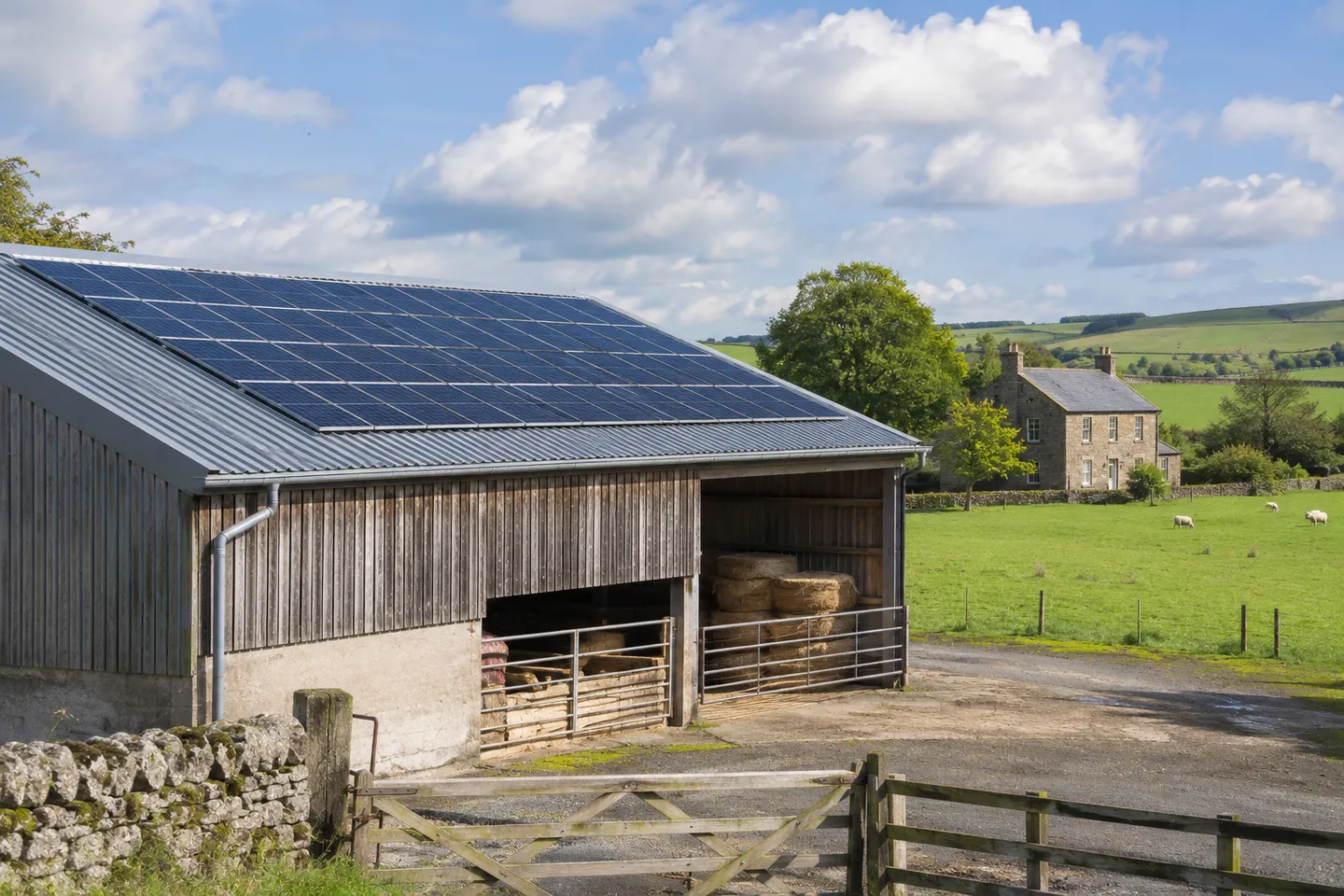
A large barn roof does not automatically justify a large array. Refrigerated produce stores, dairy cooling and ventilation may provide useful daytime loads, while grain drying and workshop machinery can be seasonal or intermittent. We review meter records alongside the operating calendar before proposing farm solar panels in Newcastle’s rural service area.
Illustrative capacities of 30kWp, 60kWp and 100kWp produce approximately 25,740kWh, 51,480kWh and 85,800kWh/year at our 858kWh/kWp Newcastle reference yield. This uses the site’s conservative south-facing, 35° planning baseline with a 20% system-loss input; it is not a surveyed barn forecast. A shallow east–west roof, tree shade or a constrained connection needs its own PVGIS model.
For a demand example, a 3kW refrigeration load running for eight daytime hours consumes 24kWh. A 10kW workshop load running for two hours uses another 20kWh. These assumed loads total 44kWh, but generation must coincide with them: overnight cooling cannot be counted as direct daytime solar use. Nameplate power alone also overstates cycling equipment’s consumption.
Agricultural solar installation costs must include access, roof preparation, mounting, electrical equipment and grid work. For illustration only, a 60kWp budget at an assumed £900/kWp equals £54,000 excluding VAT, before separately priced roof replacement, asbestos work or network reinforcement. This is a budgeting calculation, not a supported market rate or a quote.
Solar panels for farm buildings use existing roof area; ground-mounted arrays need land, foundations, cable routes and a separate planning assessment. Compare our commercial PV guide for business consumption and investment assumptions. Non-domestic roof planning conditions and prior approval can apply to farm buildings; an agricultural use does not provide blanket permission.
Compare conventional rooftop solar installation→