
Waterproofing & Flashing
Specify a complete compatible tray, flashing and drainage arrangement. Coordinate laps, edges, penetrations and adjacent tiles or slates with the roofer; panels alone are not a complete weatherproof roof.
In-roof solar panels in Newcastle replace part of your roof covering rather than sitting above it. We coordinate the PV layout with the roof design so flashing, ventilation and electrical work are considered together. Compare integrated panels with conventional on-roof PV before committing to a new roof. We provide in-roof solar panel installation for suitable new-build and reroofing projects across Newcastle.
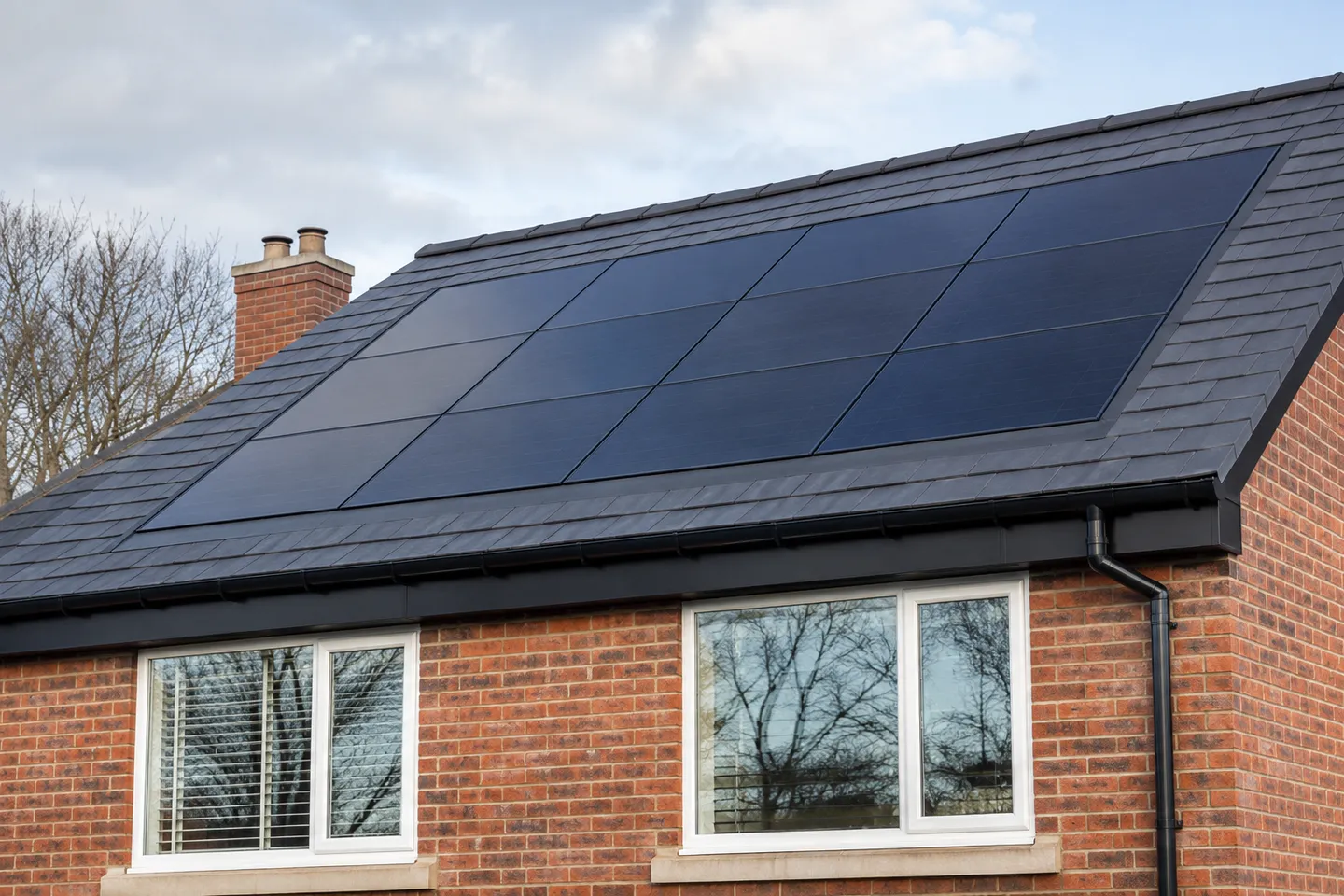
Integrated solar panels in Newcastle are usually most practical when a roof is already being stripped or built. On-roof panels sit on mounting rails above the covering; in-roof systems replace the covering within the array area using a compatible weatherproofing assembly. Retrofitting into a sound finished roof introduces stripping and reinstatement costs that an on-roof system may avoid.
Compare the incremental solar cost within the complete roofing project. Illustration only: assume £9,500 for an in-roof PV scope including its integration work, £1,000 of conventional roof covering avoided and a £7,000 on-roof PV alternative. The net comparison is £8,500 versus £7,000, a £1,500 premium. These invented budget inputs are not market quotations; shared roofing and access costs must be treated consistently to avoid counting a saving twice.
For capacity, ten assumed 450W modules give 4.5kWp. Our conservative Newcastle reference yield of 858kWh/kWp suggests approximately 3,861kWh/year for a south-facing 35° system using a 20% system-loss input. The documented PVGIS calculation gives a closely aligned baseline; actual dimensions, roof pitch, shade and thermal conditions need a project model.
Roof-integrated solar panels depend on the whole roofing detail, not just a panel’s wattage. As a manufacturer example, Viridian’s Clearline Fusion documentation describes an integrated system; the chosen product’s installation manual must determine compatible roof pitches, coverings, flashing and ventilation. Do not assume products from different systems can be mixed.
For Newcastle residential renovation and redevelopment, agree the layout before rooflights, vents and insulation details are fixed. Listed buildings, conservation areas and local restrictions need a planning check: a flush finish does not remove consent requirements. If an individual tile-like finish is the priority, compare solar roof tiles against larger integrated modules.
Compare conventional on-roof solar panelsIn-roof solar installation combines two jobs: weatherproof roofing and electrical generation. Both responsibilities need clear specifications.
Specify a complete compatible tray, flashing and drainage arrangement. Coordinate laps, edges, penetrations and adjacent tiles or slates with the roofer; panels alone are not a complete weatherproof roof.
Follow the product’s rear ventilation and roof build-up requirements. Temperature affects output, so compare realistic mounting-specific generation estimates rather than assuming a flush array performs identically to a ventilated on-roof system.
Check module dimensions, permitted roof pitch, wind resistance and compatibility with the covering. Obtain separate details of product, performance, roofing and workmanship cover, including responsibility for leaks.
Plan safe electrical access and a replacement method. Removing an integrated module may involve flashing or adjacent covering; check spare parts and how maintenance will preserve weatherproofing.
We plan in-roof solar panels in Newcastle with the roofing team before the covering is ordered, keeping the generation design and weatherproofing details aligned. The process runs from property assessment and system specification to quotation, installation and commissioning.
Check whether this is a new build, full reroof or retrofit. Review drawings, covering choice, structure, roof pitch, shade and electricity use.
Select compatible modules and the complete integration system. Coordinate ventilation, flashing, fire and structural requirements, rooflights and cable routes.
Agree who supplies each component and who is responsible for weatherproofing. Resolve permissions and grid requirements, then programme the roof opening and electrical works.
Inspect roofing details and commission the electrical system. Hand over test records, monitoring, warranties and a clear route for maintenance or a future module replacement.
They can make sense during a planned reroof or new build, when some roof covering and shared access costs can be avoided. The financial case is weaker if a sound roof must be stripped only to integrate panels. Compare the whole project and the incremental PV cost.
The specified roofing assembly provides the weatherproofing. Compatible trays, flashing, laps and drainage must be installed correctly for the roof pitch and covering. A solar module by itself is not a substitute for the full integration system.
Output depends on the module and installation. Restricted rear airflow can raise operating temperatures, but the effect is product- and roof-specific. Compare a mounting-appropriate generation model rather than applying a universal performance penalty.
Sometimes, if the covering can be removed and reinstated safely around the array and the structure and product details are suitable. Local roofing work and access can make this more expensive than fitting an on-roof array to an otherwise sound roof.
The replacement method depends on the mounting and flashing design. Confirm how the unit can be isolated, removed and replaced, whether compatible spares are available and who restores the weatherproofing.
No. Listed status, conservation-area rules and local restrictions still need checking. Discuss the roof design with the relevant planning authority before ordering; appearance alone does not establish permitted development or listed-building consent.
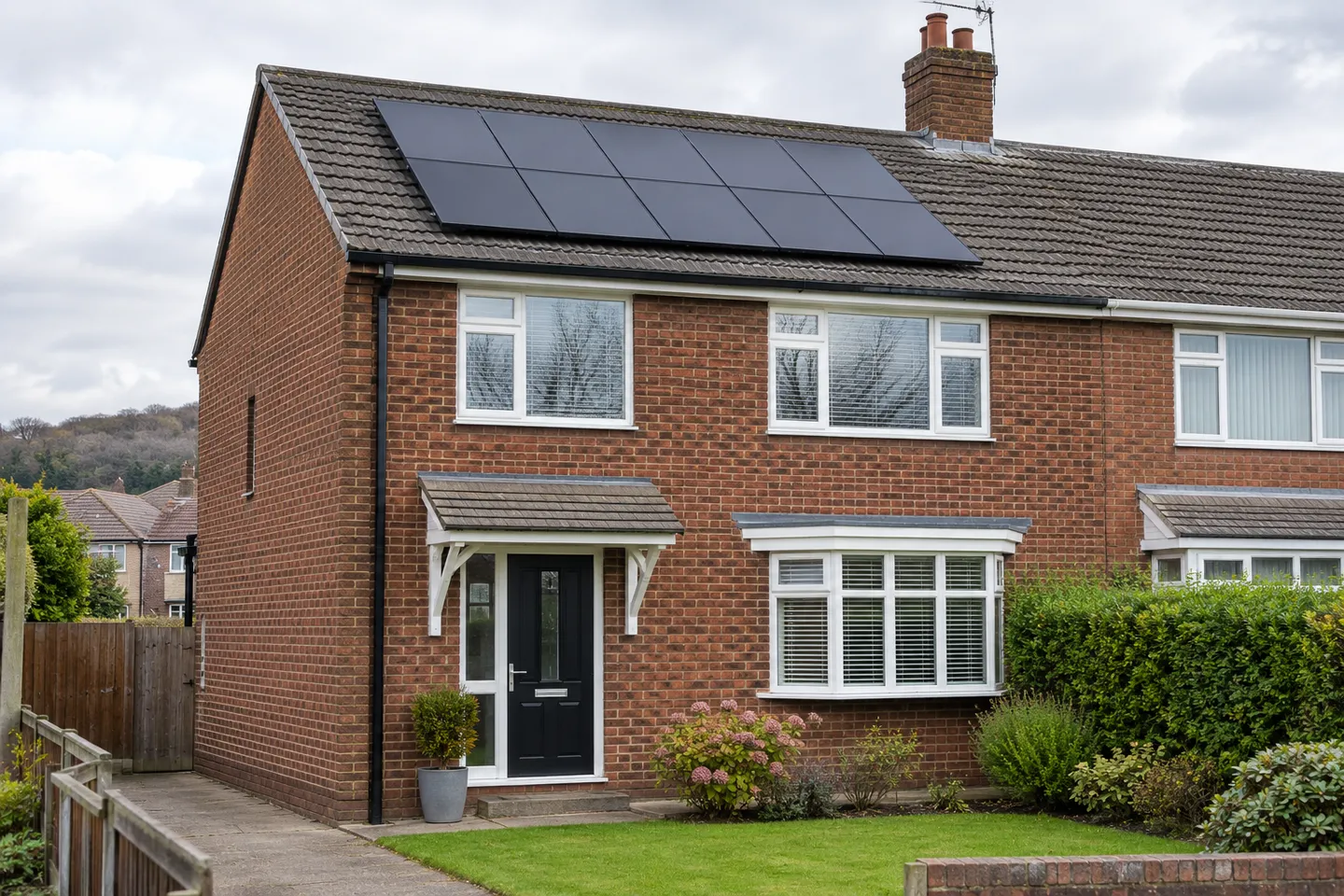
Share your roof drawings, pitch, covering choice and planned roofing date. Tell us whether the roof is new, being replaced or still sound so we can compare an integrated proposal with a conventional array.